Beige Leather Digital Paper: A Practical Resource for Designers and Makers
In the realm of digital design and physical craft, texture is often the differentiator between a flat, generic output and something that feels tactile, premium, and intentional. Beige Leather Digital Paper addresses this need by providing a high-fidelity digital asset that mimics the visual weight and subtle grain of genuine leather without the logistical challenges of sourcing, cutting, or scanning physical materials. This resource has become a staple in the workflows of graphic designers, scrapbookers, small business owners, and DIY enthusiasts who require a neutral yet sophisticated background element to anchor their compositions.
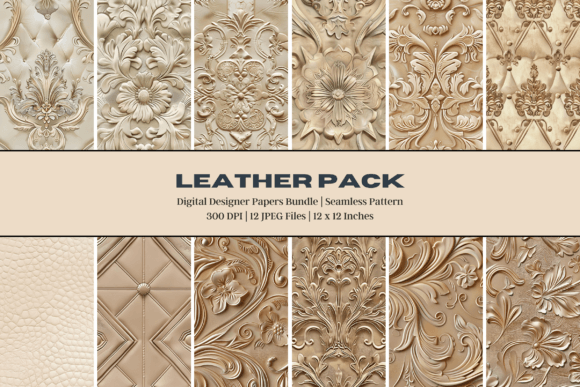
The specific offering described—a collection of 12 seamless patterns in JPG format, rendered at 300 DPI and sized at 12 x 12 inches—represents a standard but highly functional specification for the industry. While the concept of "digital paper" is not new, the execution of beige leather textures requires a careful balance of realism and versatility. Too much noise can make the texture overwhelming; too little detail renders it plastic-like. The following analysis explores the practical applications, technical specifications, and strategic value of using beige leather digital assets in both digital and hybrid print projects.
Technical Specifications and File Integrity
Before evaluating creative application, it is essential to understand the technical foundation of the asset. The inclusion of 12 seamless patterns within a single ZIP file suggests a curated variety rather than a monotonous repetition. In professional design, "seamless" is a critical keyword. It implies that the pattern tile can be repeated infinitely in any direction without visible breaks or hard edges. This is non-negotiable for web backgrounds, large-format prints, or packaging designs where the surface area exceeds the dimensions of a single image file.
The resolution of 300 DPI (dots per inch) is the industry standard for high-quality printing. For digital-only displays, this density may exceed pixel requirements, but it ensures that the asset remains viable for future-proofing projects that might transition from screen to print. The 12 x 12 inch dimension is particularly significant because it aligns with the legacy standards of digital scrapbooking and many common printer paper sizes. This compatibility reduces the need for resizing, which can introduce interpolation artifacts and degrade image quality. By providing the asset in its native working size, the creator respects the user’s workflow, allowing for immediate placement in software like Adobe Photoshop, Canva, or CorelDRAW without preliminary adjustments.
Aesthetic Versatility and Color Psychology
Why beige? Why leather? These choices are driven by current design trends that favor minimalism, warmth, and organic authenticity. Beige occupies a neutral space on the color spectrum, making it an ideal canvas for other elements. Unlike stark white, which can feel clinical, or black, which can feel heavy, beige leather offers a warm, inviting tone that enhances readability and visual comfort. It complements a wide range of accent colors, from deep burgundies and forest greens to bright yellows and soft pastels.
The leather texture adds a layer of perceived value. Even in a digital context, the human brain associates leather with durability, luxury, and tradition. When used in website designs or blog layouts, this association can subtly elevate the brand perception, suggesting reliability and craftsmanship. For invitations and birth announcements, the texture evokes a sense of celebration and permanence, moving away from disposable digital aesthetics toward something that feels archival and cherished.
Practical Applications Across Industries
The utility of Beige Leather Digital Paper extends far beyond simple background filling. Its seamless nature and realistic texture make it suitable for a diverse array of use cases:
- Digital Scrapbooking and Layouts: For hobbyists and professionals alike, these patterns serve as foundational layers. The 12 x 12 inch size matches standard album dimensions, allowing users to overlay photos, journaling cards, and decorative elements seamlessly. The variations among the 12 patterns allow for tonal shifts within a single project, adding depth without changing the overall theme.
- Branding and Stationery: Small business owners and freelancers can utilize these textures for business cards, logos, and handmade stationery. When printed, the leather effect adds a tactile dimension to corporate identity materials. For planner stickers and place cards, the neutral tone ensures that text remains legible while providing a stylish backdrop.
- E-commerce and Packaging: In the competitive landscape of online retail, product presentation is key. Using beige leather textures for packaging mockups or wrapping paper designs can help products stand out. It provides a premium unboxing experience, whether applied physically via printing or digitally in product photography composites.
- Event Design: For weddings, birthdays, and parties, these assets facilitate rapid prototyping of decor. Invitations, tags, and decorated furniture concepts can be visualized quickly using these digital papers, reducing the cost of physical prototypes during the planning phase.
- Craft and DIY Projects: Beyond pure digital work, these files are invaluable for decoupage and books/journals hardcovers. Users can print the patterns directly onto adhesive sheets or cardstock to cover boxes, frames, or book bindings, achieving a custom look that would be difficult to replicate by hand.
Workflow Efficiency and Cost-Effectiveness
One of the primary arguments for using digital paper assets is efficiency. Creating a realistic leather texture from scratch requires advanced knowledge of layer styles, displacement maps, and brushwork in photo editing software. For a freelancer managing multiple client deadlines, spending hours perfecting a background texture is an inefficient allocation of time. Purchasing a pre-made, high-resolution pack like this allows designers to focus on layout, typography, and messaging—the core components of effective communication.
Furthermore, the cost-benefit analysis favors digital assets over physical materials. Sourcing actual leather swatches involves shipping costs, minimum order quantities, and storage issues. Printing physical samples for client approval is expensive and slow. Digital papers eliminate these friction points. A designer can generate ten different mockups for a client in the time it takes to order one physical sample. This agility is particularly valuable for entrepreneurs and marketers who need to test visual strategies rapidly.
Potential Limitations and Considerations
While Beige Leather Digital Paper offers significant advantages, users should remain aware of certain limitations. First, the appearance of leather on screen differs from its appearance in print. Lighting conditions, monitor calibration, and printer profiles can alter the perceived tone of the beige. It is advisable to always print a proof before committing to a large run, especially if color accuracy is critical for brand consistency.
Secondly, the "seamlessness" of the pattern must be verified in the final composition. While the tiles are designed to repeat flawlessly, complex layouts that involve cropping or warping the image may reveal seams if not handled carefully. Designers should ensure that the pattern is scaled appropriately so that individual grains do not appear unnaturally large or repetitive.
Finally, the JPG format, while widely compatible, is lossy. For projects requiring extensive editing, such as removing objects behind the texture or adjusting local contrast, a TIFF or PSD file might offer greater flexibility. However, for most use cases involving background placement and overlay, JPG provides sufficient quality with manageable file sizes.
Conclusion
The value of Beige Leather Digital Paper lies in its ability to bridge the gap between digital convenience and analog aesthetic. It provides a versatile, high-quality texture that enhances visual hierarchy and emotional resonance across a wide spectrum of creative endeavors. Whether you are designing a minimalist blog, crafting personalized wedding invitations, or developing packaging for a handmade jewelry line, this asset offers a reliable foundation for your work.
For professionals and serious hobbyists, the combination of 300 DPI resolution, seamless tiling, and neutral elegance makes this a practical addition to any digital library. It saves time, reduces material waste, and elevates the perceived quality of final outputs. By integrating such resources into their workflow, creators can produce more polished, cohesive, and impactful designs without compromising on budget or schedule.